
 Healthcare Professionals


Step 1: Talk to your doctor to find out why you sweat
Your first step is to see a knowledgeable healthcare provider, who can determine whether your sweating is primary or secondary hyperhidrosis. Primary hyperhidrosis (often just called “hyperhidrosis”) is excessive, uncontrollable sweating with no clear cause. Secondary hyperhidrosis is extreme sweating that is a symptom of another medical condition or a side effect of a medication.
This distinction is key, because the appropriate — and safe — next steps depend on which type you have. Your provider can rule out medication side effects or underlying conditions that need treatment in their own right. (Do not change any medication schedule without a doctor’s supervision.) For more on the condition, see what hyperhidrosis is.
Step 2: Match treatment to where you sweat
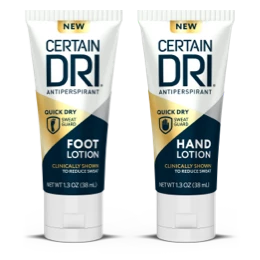
If you have primary hyperhidrosis, the next step is to learn the treatment options for the parts of your body where you sweat. Management can vary depending on whether you sweat from the underarms, hands, feet, or face, but no matter where you sweat, experts often recommend an antiperspirant as the first step or as an addition to other treatments.
When you apply an antiperspirant, its active ingredients create superficial plugs just below the surface of the skin that block the sweat ducts. When the body senses that a duct is not functioning, a feedback mechanism temporarily stops that duct’s sweat production. Depending on the formula, those plugs can last 24 hours or more. You can read more about the science on the Certain Dri difference page.
Step 3: Use a clinical-strength antiperspirant correctly
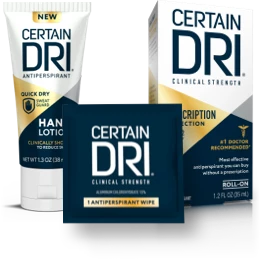
For more powerful results, choose a clinical-strength antiperspirant — the strongest type available without a prescription — and apply it the right way. Clinical-strength formulas contain higher concentrations of active ingredients, or different and stronger actives, than regular antiperspirants. All Certain Dri antiperspirants are clinical strength and gentler on skin than prescription formulations.
Which is the best antiperspirant for excessive sweating?
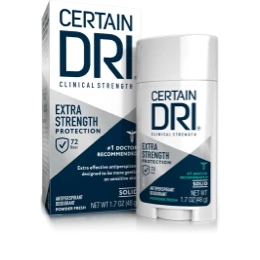
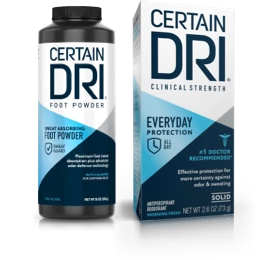
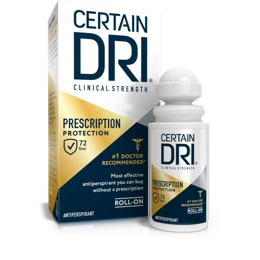
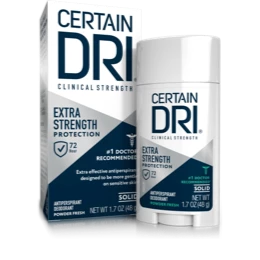
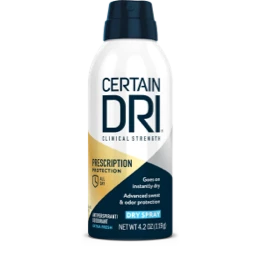
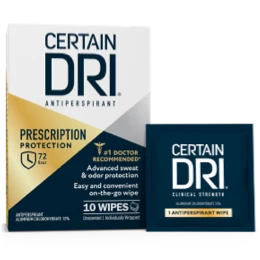
The best antiperspirant for excessive sweating is a clinical-strength formula with a high concentration of an effective aluminum active — and the same formulas work for men and women. Certain Dri makes three strengths so you can match the formula to how much you sweat and how sensitive your skin is:
| Certain Dri product | Active ingredient | Best for |
|---|---|---|
| Prescription Strength | 15% aluminum chloride (the FDA maximum) | Heavy or excessive sweating |
| Extra Strength Clinical | Aluminum sesquichlorohydrate | Strong protection with sensitive skin |
| Everyday Strength Clinical | Aluminum zirconium trichlorohydrex gly (20%) | All-day, low-irritation everyday wear |
How to apply it for best results
Active ingredients need time to settle into the sweat ducts, and because most people sweat least at night, bedtime is the ideal time to apply. If you only apply in the morning, daytime sweat washes the active ingredients away before they can work. Apply to completely dry skin, too — on wet skin the actives work less effectively and irritation is more likely. For more, see our 7 ways to get the most out of your antiperspirant.
Is Certain Dri safe?
Yes — Certain Dri uses FDA-approved over-the-counter antiperspirant actives, and aluminum-based antiperspirants have been used safely for more than 80 years. As the experts cited on our myths & facts about aluminum page explain, there is no convincing scientific evidence that antiperspirant use poses a threat to human health. Use the product as directed, and follow the Drug Facts label on your specific Certain Dri product.
What are the side effects of Certain Dri?
The most common side effect of any antiperspirant, including Certain Dri, is temporary skin irritation. You can minimize it by applying to completely dry skin at night, and by not applying right after shaving or showering, when skin is most easily irritated. If a rash or irritation develops, stop use. Because Certain Dri is water-based rather than alcohol-based, it is formulated to be kind to skin.
Step 4: Find support and understanding
Excessive sweating can affect many parts of life, so the fourth step is to reach out for support. If sweating is interfering with your relationships, activities, confidence, or mood, friends, family, mentors, and healthcare professionals can help you find understanding, additional treatment, and wellness services. For more information and support, explore the resources at SweatHelp.org from the International Hyperhidrosis Society.