
 Healthcare Professionals


What is the medical term for excessive sweating?
The medical term for excessive sweating is hyperhidrosis. It describes sweating beyond what the body needs to regulate temperature, and people who have it often sweat four to five times more than is considered normal. Hyperhidrosis most commonly affects the underarms, hands, feet and face, and it can happen even when you are cool and sitting still.
Your 4 million sweat glands and the perspiration they produce are completely normal — sweating is how the body sheds excess heat. But there is such a thing as too much of a good thing, and that is what hyperhidrosis is. If you would like the full picture, start with what hyperhidrosis is.
How much sweating is too much?
Sweating is “too much” when it is visible, hard to control, and interferes with daily life. If you are dripping in an air-conditioned office, soaking through shirts, or constantly changing or carrying extra clothes to stay comfortable, that points to excessive sweating rather than ordinary perspiration.
For many people, recognizing that point is obvious. One expert on excessive sweating told WebMD that “pretty much anyone who comes to me complaining of excess sweating has it,” and a co-founder of the International Hyperhidrosis Society has said, “Most people really do understand when they are sweating too much.” In other words, if you think you sweat too much, you are probably right. Common signs include:
- Sweat runs or drips, or your clothing and hair become noticeably damp.
- You sweat four to five times more than the people around you in the same conditions.
- You drop or damage items because your hands are wet.
- Your clothing, hairstyle, hobbies, career, or social choices are dictated by sweating.
- Recurring dampness leads to skin problems, such as bacterial or fungal infections.
- Sweating affects your mood, confidence, or mental wellbeing.
When should you see a doctor about sweating?
See a doctor if your sweating is excessive, started suddenly, happens during sleep, or comes with other symptoms. Night sweats, unexplained weight loss, fever, or a racing heart alongside sweating can signal an underlying condition and should be evaluated promptly.
It is also worth talking to your doctor about any new or different sweating pattern, because sweating can be a symptom of another medical problem. Unfortunately, many people experiencing excessive sweating are too embarrassed to seek help. That is a shame, because treatments — and combinations of treatments — can make life with extreme sweating far more manageable. If you are not sure how an appointment works, see how a doctor diagnoses hyperhidrosis.
Primary vs. secondary hyperhidrosis
Primary hyperhidrosis is excessive sweating with no underlying medical cause; secondary hyperhidrosis is sweating caused by another condition or a medication. The distinction matters because it determines the right — and safe — next step.
A number of different medical conditions and medications can cause secondary hyperhidrosis, which is why it is important to have a knowledgeable healthcare provider rule those out first. (Never change a medication schedule without your doctor’s supervision.) You can learn more about secondary hyperhidrosis from the International Hyperhidrosis Society. If you and your provider have ruled out other reasons and determined your sweating is “idiopathic” (sweating with no known cause), it is time to focus on treatment.
How is hyperhidrosis treated?
Treatment for hyperhidrosis usually starts with a clinical-strength antiperspirant and escalates from there. Antiperspirants that contain aluminum salts are the recommended first step for excessive sweating; if they are not enough on their own, a doctor may add options such as prescription medications, iontophoresis, Botox, or other procedures.
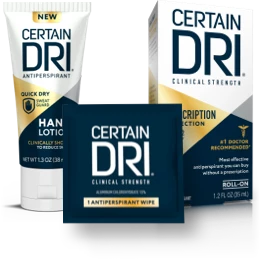
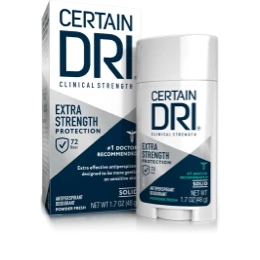
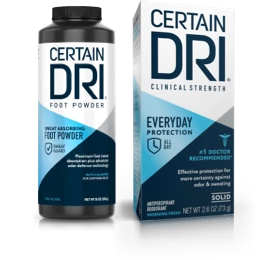
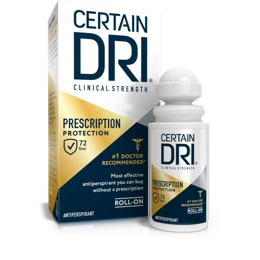
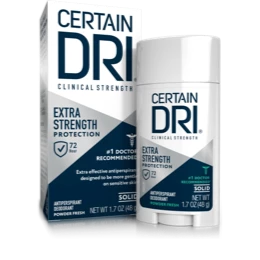
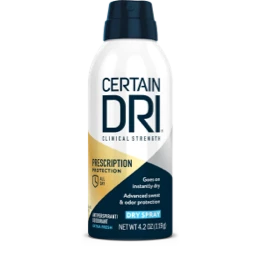
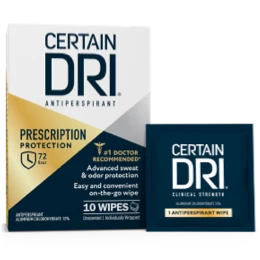
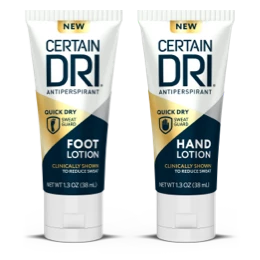
With your doctor’s help, you can decide whether antiperspirants such as Certain Dri are the right choice on their own, in combination with another treatment, or whether other treatments are more appropriate. This is an individual, dynamic process, and some trial and error is normal. Aluminum chloride is the strongest over-the-counter antiperspirant active, and on store shelves you will only find it in Certain Dri Prescription Strength at 15% — the FDA maximum for that ingredient. In a 2017 survey, 85.3% of the dermatologists surveyed recommended aluminum chloride most often for patients with excessive sweating, and Certain Dri is the #1 recommended brand of antiperspirant for people with hyperhidrosis. Because Certain Dri is water-based rather than alcohol-based, it is also kind to skin.
If you use an antiperspirant such as Certain Dri, two tips from the International Hyperhidrosis Society help you get the most out of it:
- Apply it at night, before bed, when your body tends to sweat the least. You can apply again in the morning if you like, but keep up the nighttime applications.
- Apply it to completely dry skin to help prevent irritation. A hair dryer on a gentle setting can help.
Whether you have been diagnosed with hyperhidrosis, are planning to talk to your doctor soon, or just want to feel drier day to day, a powerful antiperspirant has a role to play. Not sure which formula fits? Compare the three Certain Dri strengths, and for quick answers see our sweat FAQs.